Showing posts with label allotment community projects. Show all posts

Saturday, 24 October 2020

Allotment Community Outreach: 3 From Plot to Community Pot


We often forget that the land that most allotments are on is owned not by the Society, or its plot holders, or in fact by the local authority, but by the community. It may be the local parish council, a local council, or a metropolitan borough whose name is on the freehold, but it remains community land and open space.

So how do allotments integrate and work with the community? In this short series of articles, we look at some of those communities and opportunities. There is no right or wrong approach, just opportunities.

3 Sharing from plot to pot

‘We all grew up in communities with grandmothers who cooked two or three vegetables that you had to eat. There were no ifs, ands or buts about it. But that’s because many of our grandparents, they had community gardens; there was a vegetable man that came around. There were many other resources that allowed them to have access. So it’s not that people don’t know or don’t want to do the right thing: they just have to have access to the foods that they know will make their families healthier’.  - Michelle Obama

We may not have grown up in the same community as Michelle Obama but the words ring true of all communities.

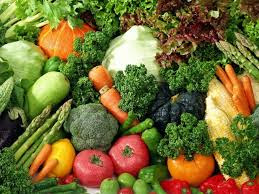
We today all have gluts of produce from our allotments which we seek advice on how to preserve, freeze, pickle and make into cordials, wine or spirits. The allotment statute prohibits the sale or commercial gain from the produce we grow. So how much can we produce and how much do we give away to friends, family and neighbours?

Unfortunately collecting excess produce and giving it to needy causes is not easy. First the vegetables must be those wanted or that can be used. It’s little use giving a food bank Patti pans or romesco cauliflowers or even more exotic and ethnic produce - they want basics and things people know how to cook. Equally they need a constant flow of produce and not one week feast the next famine. Finally, the want produce that still has a chance of making it to the plate before it has to be thrown. The logistics of collecting, consolidating, and distributing fresh food is a lot harder than tins and packets but can be far more nutritious.

Our site has a very diverse ethnic mix which reflects the community in which we live. Other sites have a different diversity which reflects their area. The food grown by these diverse groups can be very different and knowing what to do with it or even naming some of it can be challenging. I can safely say that those traditional allotment staples of spuds, beans, carrots leeks cabbage etc are only grown on probably half our plots.

So maybe there are two challenges in sharing excess with the community. Firstly, that of the right produce to the right people at the right time. Secondly educating people about the produce they have probably never seen let alone cooked or consumed. This second opportunity is about plot to pot.

‘We estimate city-wide allotment production of >1200 t of fruit and vegetables and 200 t of potatoes per annum, equivalent to feeding >8500 people. If the 13% of plots that are completely uncultivated were used this could increase production to >1400 t per annum, feeding ~10,000 people, however this production may not be located in areas where there is greatest need for increased access to fresh fruits and vegetables.’ Feb 2020: Feeding a city – Leicester as a case study of the importance of allotments for horticultural production in the UK published by Elsevier Science.‘

Imagine not only providing the excess produce but teaching groups how to cook it and then serving it up to the homeless, the needy and the community. There are initiatives to do this but they need the produce, and they themselves may need to understand how to prepare and cook it and it has to be served either in a kitchen or taken to folk on wheels.

It would be amazing if sites worked together across a borough or even across a whole city to collect the produce and then with a body, or charity, who could distribute it to the needy. By working together sites could ensure a more consistent flow of fresh produce in sufficient quantities.

It would be amazing if the young unemployed could learn to cook using the excess produce along with other foodstuffs and providing the resultant meals to where they are needed.

When you next put that extra pumpkin, squash, courgette, beans into the compost bins, or you look at the green tomatoes on the window sill, or you look at the freezer crammed with frozen vegetables from the plot ask, if they could be used in the community and how that could happen. 

‘There is enough on this planet for everyone’s needs but not for everyone’s greed.’ Mohandas Gandhi.

Friday, 23 October 2020

Allotment Community Outreach: 2 Community Land


We often forget that the land that most allotments are on is owned not by the Society, or its plot holders, or in fact by the local authority, but by the community. It may be the local parish council, a local council, or a metropolitan borough whose name is on the freehold, but it remains community land and open space.

So how do allotments integrate and work with the community? In this short series of articles, we look at some of those communities and opportunities. There is no right or wrong approach, just opportunities.

2. Community Land

The allotment acts were set in statue at the beginning of the 20th century to encourage, protect and give impetus to the development of allotments for communities grappling with urban sprawl, industrial pollution, an unhealthy lifestyle, no land on which to grow and general polarisation of society. Today we can change the labels, but the messages are similar. The laws as set out intended that allotments were to be available for a percentage of the population has long gone. The allotment movement went in and out of fashion during the 20th century and the space within urban areas disappeared rarely to return. The Thorpe Report in 1969 put forward the case again, but got short shrift against the materialism, consumerism and social change of the day and the decline in allotment demand continued until the 21st century.

'We also believe that boroughs that have unmet demand for allotments should consider using s106 agreements to compel the developers of high density housing to allocate a portion of land for use as allotments.'  -London Assembly report: A Lot to Loose: London's Disappearing Allotments, Oct 2006.

Today many now seek a return to the health and well being on offer through allotments. The environment, biodiversity, and all things green and healthy may be spoken of by all, but the reality is that concrete and glass development still dominate in a world of exploding population growth. Perfect supermarket vegetables with ‘sell by dates’ are deemed to be better than ‘wonky veg’ and no so perfect vegetables. Allotments continue to be low in the prioritises of local authorities. 

‘The lesson I have thoroughly learnt, and wish to pass on to others, is to know the enduring happiness that the love of a garden gives.’ Gertrude Jekyll.

How do we accommodate the children, their parents, community social groups, those less able and effectively create a virtual circle of opportunity to grow? Allotments are only part of the answer and they can help encourage and educate, but they are not the solution but merely part of it.

‘…it must be capable of being applied equally to land used for all forms of recreation, since the only land use criterion distinguishing the allotment from the playing field and the park is the number of people who can be accommodated on it. Those who use this argument – and they include many local councillors – are thinking of ‘value’ purely in commercial terms, whereas the planner, values cannot always be stated in such terms…’ item 654 page 261 section 7 Thorpe Report 1969.

Community gardens are often sighted as the answer, but these often have little protection in the law, are heavily dependent on a small handful of enthusiasts and often are torn between being fully voluntary and requiring funding. Again, they are only part of the solution and not the solution.

Housing Associations (HSA) could provide extremely useful and productive areas within their estates. The major drawback here is that they often can only allocate land to the specific estate’s residents, so again are highly dependent on individuals. Here the HSA will often also require a visually acceptable and managed area which sounds easy but may not be so easy to maintain.

The bottom line is that the land is often owned by a body whose interest may be long term and in conflict with those of those seeking to work it.

'At a time of acute land scarcity, it is not surprising that envious eyes have been cast on urban allotment sites. They are almost invariably to be found within the perimeter of the town, where land is most urgently required. They often lie close to heavily built up areas, where the need for ancillary services is the greatest. As little or no demolition is necessary, they are usually simple to develop. Since the closure of an allotment site affects the lives of only a small minority of the town's inhabitants (and electorate) no great clamour of protest occurs. Finally, many sites, because of their untidiness and neglect, are looked upon by the public primarily as horticultural slums, whose disappearance would add to the attractiveness of the town and would provide space for more homes, schools or playing fields. It follows that if a planner proposes that a site should be developed, he is usually assured of the support both of the local authority and the majority of its ratepayers...' - item 88 page 32 section 1 Thorpe Report 1969.

‘I could put up a nice block of flats there and help meet the housing demand and targets,’ says the developer to the local authority who has steep targets to meet and little land and money to achieve them.

Should planners look to the provision of allotments and community gardens in the same way they look at schools, medical centres, parks, playgrounds? After all, allotments aid education, they can provide prescriptive medicine and health and wellbeing, are the best ‘five a day ’promotion and assist both physical and mental health.

For many allotments are still seen as shanty towns, overgrown wastelands and day care centres for the old.

Is this where we have to think seriously about rooftop gardens, sky gardens, urban growing on industrial sites? 

It is all about balance and as land scarcity increases and housing demand continues to grow, there is perhaps a need for a different approach to planning and provision of open space.

‘I support Alice Waters in her desire that there be a vegetable garden at the White House. I don’t think they should rip up the Rose Garden, because that’s something that I love. They should probably grow some vegetables there.’ - Martha Stewart.

The allotments also need to look beyond their fences and outreach to their communities and engage with them and perhaps alter their food supply and perception of growing and their perception.


Thursday, 22 October 2020

Allotment Community Outreach: 1 People and Groups


John F Kennedy once said, ‘Ask not what your country can do for you, but what you can do for your country.’ If we substitute community for country, then we have an interesting question to answer.

We often forget that the land that most allotments are on is owned not by the Society or in fact by the local authority but by the community. It may be the local parish council, a local council, or a metropolitan borough name on the freehold, but it remains community land. So how do allotments integrate and work with the community? In this short series of articles, we look at some of those communities and opportunities. There is no right or wrong approach, just opportunities.

1.       People and Groups

Many allotments accommodate a local school; a plot where those lucky enough to work it are taught into potentially becoming tomorrow’s allotment and leisure gardeners. They also can benefit from environmental studies and awareness about recycling, soil management, the impact of weather changes and an understanding of horticulture, nature, and biodiversity are on offer. An exposure to all aspects of health and wellbeing be it fresh food, physical exercise, mental, biodiversity, wildlife, as well as the basic relationship between growing produce and domestic science are also there for the schoolchildren to appreciate.


The Greek philosopher Aristotle once said, ‘Give me a child until he is seven and I will show you the man’. I would not limit to seven and an child engaged in an allotment will influence others and could even teach their own parents and enthuse them. The skills learnt will never be forgotten and are practical ones that can be used later in life.

We have a plot run by the caretaker of the local school who has a group of children who are engaged in the plot and we would love to have more but we don’t have the space. Perhaps this is where allotments. can go now, into the schools to help establish plots and start them on their journeys of discovery? 

Last year the schoolchildren who work the plot won a London award presented by Alan Titchmarsh.  

In today’s inner cities ‘house with garden’ is being displaced by the ‘flat with balcony’ and in many cases without balcony. Space is shrinking and so skyscraper towers are starting to dominate the landscape. Here in Docklands we have the highest density of residential housing in Western Europe and an area in Canary Wharf with a population greater than the largest of UK cities. This means the young never experience growing off the land and the older community must confine it to memory. Today our site is over 250% oversubscribed and that means you would be lucky to get a plot in 25 years. But they still join our waiting list which is growing by the month.

The allotment can’t accommodate more; we have already cut many plots in half and all new starters must start on a half plot which in real terms is actually a quarter plot. Perhaps we should take the allotments to the people? We have one initiative with a housing association to create community garden plots within the estate land which is often grassed and planted for low maintenance. We are getting those in the estate and on the waiting list engaged and, if it works, aim to push it further.     

Then there are those less fortunate than us who have physical and mental challenges and could not work a plot without supervision, help and care. It is not easy finding the right group and even harder to find the right space, but it can be extremely rewarding all round. It is not a case of building disabled beds and looking for the group, but perhaps working with a group to meet their special needs. Again, the space does not have to be within the allotments, it is about sharing time and experience to help other less fortunate enjoy what we take for granted.

There are also prescriptive plots or gardens where those suffering from long term illness or recovering from major problems can build back their lives in a social space and with an interest in growing and with a purpose to broadening education.

Finally, a doctor started to bring a few of their hospital co-workers to their plot. We had to check who the visitors were and authorise it during Covid but suddenly the plot was transformed in a season and you realised that key workers need a break, need to unwind and allotments are the perfect tonic for many. It certainly makes you think about the wider community.   

Winston Churchill once said, ‘The pessimist sees difficulty in every opportunity, the optimist sees opportunity in every difficulty.’ You cannot cover all the community opportunities, neither can you always get them right, but in today’s space poor environment we perhaps should share more.